


28 July 2025: Articles 
Spontaneous Hemo-Mediastinum Following Laparoscopic Appendectomy: A Case Report
Diagnostic / therapeutic accidents
Abanoub Awad ABDE 1*, Isaac Theerman AE 1, Jeremy F. McBride BE 2, Jason Beckermann AE 1DOI: 10.12659/AJCR.949251
Am J Case Rep 2025; 26:e949251


Abstract
BACKGROUND: Intra-thoracic bleeding in the form of hemo-mediastinum is a rare condition often resulting from trauma or malignancy, or can occur spontaneously. Spontaneous intra-thoracic bleeding, particularly following laparoscopic appendectomy, is extremely uncommon and not typically associated with such procedures.
CASE REPORT: A 65-year-old man with a history of interstitial lung disease due to mixed connective tissue disease, chronic cough, pleurodesis, and coronary artery disease developed massive mediastinal hematoma and hemodynamic instability following an uncomplicated laparoscopic appendectomy for gangrenous appendicitis. Symptoms included chest pain and hemoptysis with a hemoglobin drop from 16.2 g/dL preoperatively to 13.2 g/dL. Contrast-enhanced computed tomography (CT) of the chest identified a large right upper-mediastinal hematoma with active contrast extravasation. Interventional radiology (IR) embolized the bleeding vessel. Due to continuous hemoptysis and hemodynamic instability, the patient was taken back to IR for a right bronchial artery angiogram and bronchoscopy. The angiogram showed an irregular segment, likely the source of the hemoptysis; this was embolized with glue. Persistent respiratory compromise and concern for tamponade physiology prompted surgical intervention. A video-assisted thoracoscopic approach was converted to thoracotomy for complete evacuation of the hematoma and lysis of adhesions. The patient’s condition stabilized postoperatively, and he was discharged home in good condition on hospital day 10.
CONCLUSIONS: This case highlights an unusual complication of spontaneous hemo-mediastinum after laparoscopic appendectomy, emphasizing the importance of early identification and timely intervention in managing this complication. To our knowledge, this is the first reported case of post-appendectomy hemo-mediastinum.
Keywords: Appendectomy, Postoperative Complications, Postoperative Hemorrhage, Thoracic Surgery, Video-Assisted, appendicitis, Humans, Male, Aged, Laparoscopy, Hematoma, Mediastinal Diseases, Tomography, X-Ray Computed
Introduction
Hemo-mediastinum is a rare condition that can result from various underlying causes, such as iatrogenic factors, trauma, malignancy, bleeding disorders, or hemorrhage from mediastinal organs [1,2]. Spontaneous hemo-mediastinum can occur due to bleeding disorders such as hemophilia, anticoagulant use, and connective tissue disorders, or idiopathically, especially following a sudden increase in intra-thoracic pressure from activities such as coughing or sneezing, or from sudden hypertension [3,4]. In clinical practice, mediastinal hematomas are typically a consequence of thoracic trauma or a ruptured aortic aneurysm, while spontaneous, non-traumatic cases are rare [1,2].
The typical clinical presentation includes chest pain, dyspnea, and hemoptysis. Some patients only present with symptoms linked to extrinsic compression of the airways or esophagus [4,5]. Computed tomography (CT) is the preferred diagnostic tool, and treatment focuses on treating the underlying cause and controlling hemorrhage when present. Management may involve urgent surgical intervention or endovascular embolization for hemodynamically stable patients [5]. We report an unusual case of spontaneous hemo-mediastinum in a 65-year-old man with a history of mixed connective tissue disease and chronic cough who developed acute chest symptoms following an uncomplicated laparoscopic appendectomy. We report this case to highlight an unrecognized risk of intra-thoracic hemorrhage following laparoscopic procedures in patients with pulmonary comorbidities. To our knowledge, this is the first reported case of post-appendectomy hemo-mediastinum in a patient with pulmonary comorbidities.
Case Report
A 65-year-old man with a medical history of interstitial lung disease due to undifferentiated connective tissue disorder, mild coronary artery disease, gastroesophageal reflux disease, chronic post-nasal congestion, chronic cough, and chronic pleural effusion status after pleurodesis was admitted to the general surgery service for appendicitis, for which he underwent an uncomplicated laparoscopic appendectomy. The appendix was found to be gangrenous with focal perforation.
During recovery in the post-anesthesia care unit (PACU), he developed acute right chest pain and hemoptysis, followed by hypotension and tachycardia. Evaluation included chest X-ray, EKG, focused assessment with sonography for trauma (FAST) exam, and contrast-enhanced chest CT. The EKG showed no ST elevation or any other abnormalities. Hemoglobin had dropped from 16.2 g/dL preoperatively to 13.2 g/dL. The chest X-ray showed upper-mediastinal widening (Figure 1). Contrast-enhanced CT chest showed a large right upper-mediastinal hematoma with active extravasation of uncertain origination site (Figures 2, 3).
Due to worsening hypotension, a massive transfusion protocol was initiated. The patient received 1 unit of whole blood and IV fluid boluses, which stabilized his blood pressure. Given the ongoing hemodynamic instability, he was urgently transferred to the hybrid operating room for IR evaluation and management.
Angiography identified active hemorrhage originating from branches of the supreme intercostal artery. Sub-selective angiography using a Renegade microcatheter identified active bleeding from a branch, likely the second intercostal artery (Figure 4). Two Hilal coils were used for embolization, and hemostasis was confirmed through angiography. The microcatheter was then repositioned into the costo-cervical trunk, and angiography revealed active bleeding from a second branch of the supreme intercostal artery. Due to the distal location and small size of the vessel, coil embolization was not feasible; instead, cyanoacrylate glue mixed with lipiodol (1: 5 ratio) was used to embolize the second bleeding artery and the residual costo-cervical trunk. Completion angiography of the right subclavian artery confirmed successful embolization and no active bleeding.
The patient was admitted to the critical care unit (CCU), intubated, and sedated. Serial CT scans demonstrated a stable hematoma in the right chest without any active bleeding, but with progressive right-lung consolidation. The next day, due to persistent hypotension and intermittent airway bleeding, he was taken back to IR for a right bronchial artery angiogram. The angiogram showed an irregular segment, likely the source of hemoptysis; this was embolized with glue (Figure 5).
Video bronchoscopy was performed in the same session, revealing no abnormalities or active bleeding. Due to concerns for compression-related tamponade physiology, he underwent video-assisted thoracoscopic surgery for evacuation of the hematoma. The procedure was converted to open thoracotomy by the cardiothoracic surgery team due to extensive adhesions. Hematoma evacuation, washout, and lysis of adhesions were performed, and 3 right-sided chest tubes were placed for drainage. The patient was returned to the CCU, where he was intubated and sedated. As he began to improve, he was weaned from mechanical ventilation 2 days after the thoracotomy operation; the chest tubes were removed in a staged manner. He was discharged home 10 days after admission, with continued recovery.
Discussion
In this case report, we present a rare occurrence of intra-thoracic bleeding in the form of hemo-mediastinum following a laparoscopic appendectomy, leading to a massive mediastinal hematoma and hemodynamic instability. Intra-thoracic bleeding following laparoscopic procedures is uncommon.
Spontaneous hemo-mediastinum is often associated with conditions that elevate intra-thoracic pressure, such as coughing, sneezing, or sudden hypertension [1,2]. Our patient had a history of chronic cough and interstitial lung disease, which likely contributed to increased intra-thoracic stress and vessel fragility, predisposing him to spontaneous mediastinal hemorrhage. Furthermore, the presence of pleural adhesions and chronic pleural effusion might have complicated his intra-thoracic anatomy, increasing his susceptibility to bleeding during or after surgery.
The patient’s presentation with chest pain, hemoptysis, hemoglobin drop, and widening of mediastinal shadow was highly suggestive of bleeding in the thoracic cavity. While it is uncommon to associate laparoscopic appendectomy with such a condition, its occurrence after the surgery in the PACU prompted immediate resuscitation and timely interventions, ultimately saving the patient’s life. The initial management consisted of blood transfusion, urgent imaging to confirm the diagnosis, and hemorrhage control.
Similar to the approach used in traumatic hemo-thorax cases, which are frequently treated with trans-arterial embolization [6], our case was first managed with IR to control the bleeding, but due to persistent signs of tamponade physiology, he ultimately required thoracotomy with hematoma evacuation and chest tube placement.
To our knowledge, this is the first reported case of spontaneous hemo-mediastinum following laparoscopic appendectomy in a patient with pulmonary comorbidities. Our report emphasizes the importance of considering potential complications in patients with pre-existing conditions that can predispose them to bleeding, and the need for a timely, multi-disciplinary approach to improve patient outcomes.
Conclusions
This case report presents the first known case of post-appendectomy intra-thoracic bleeding in the form of hemo-mediastinum, emphasizing the need for heightened awareness of potential unusual complications in patients with predisposing conditions. Even routine procedures can present unexpected challenges, particularly in vulnerable patient populations.
Figures
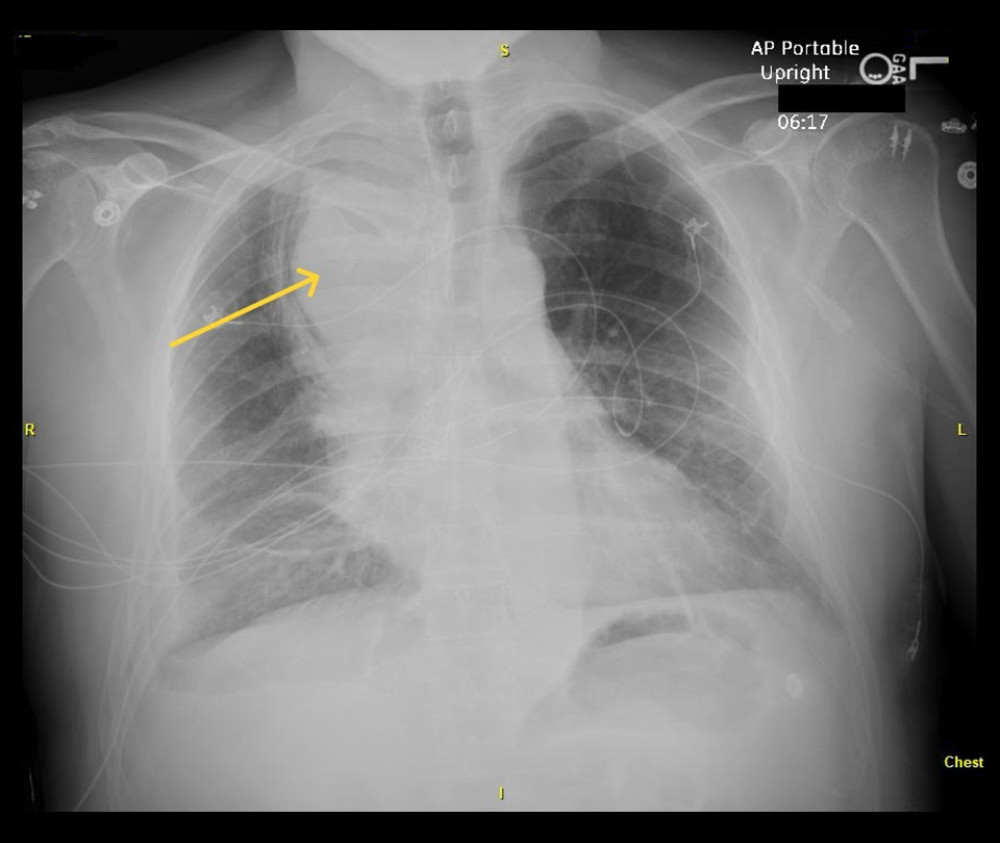 Figure 1. Chest X-ray showing widening of mediastinum (arrow).
 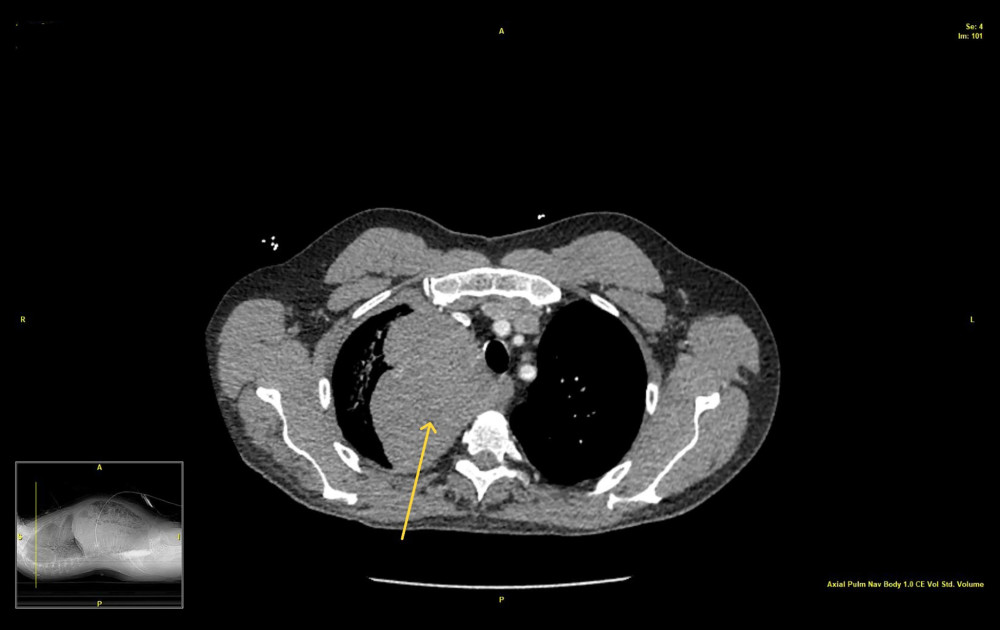 Figure 2. CT chest axial view showing mediastinal hematoma (arrow).
 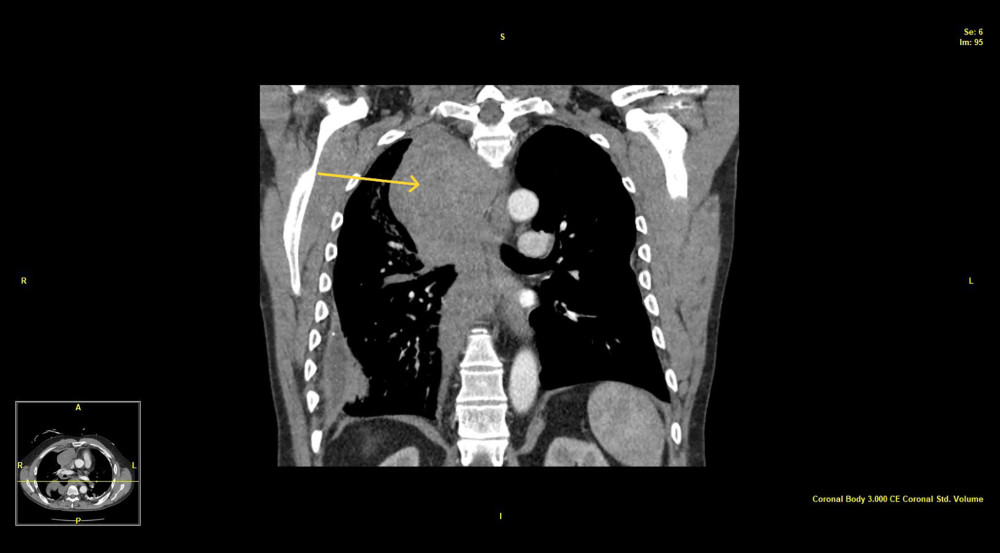 Figure 3. CT chest coronal view showing mediastinal hematoma (arrow).
 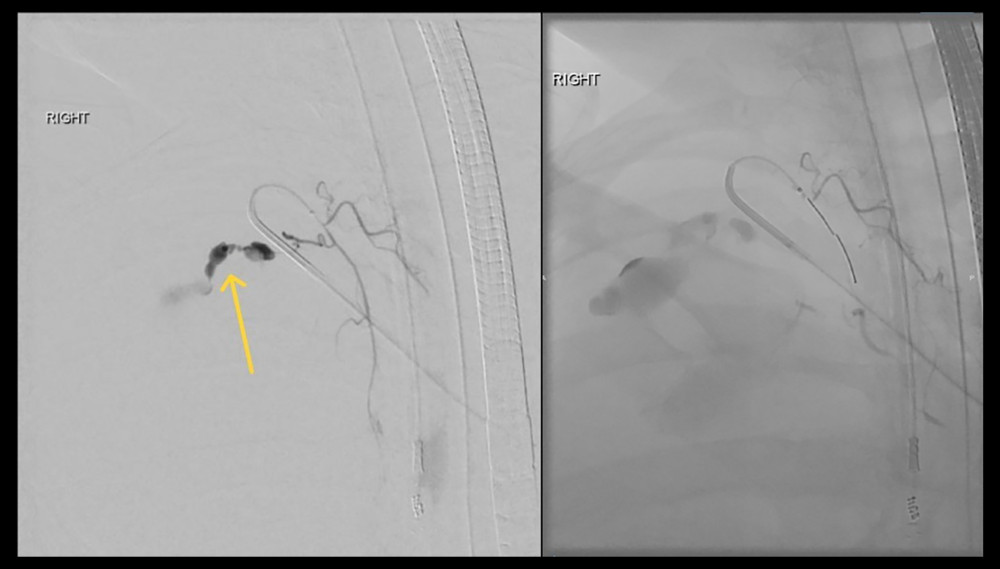 Figure 4. Angiogram showing bleeding from right second intercostal artery (left) and after embolization (right).
 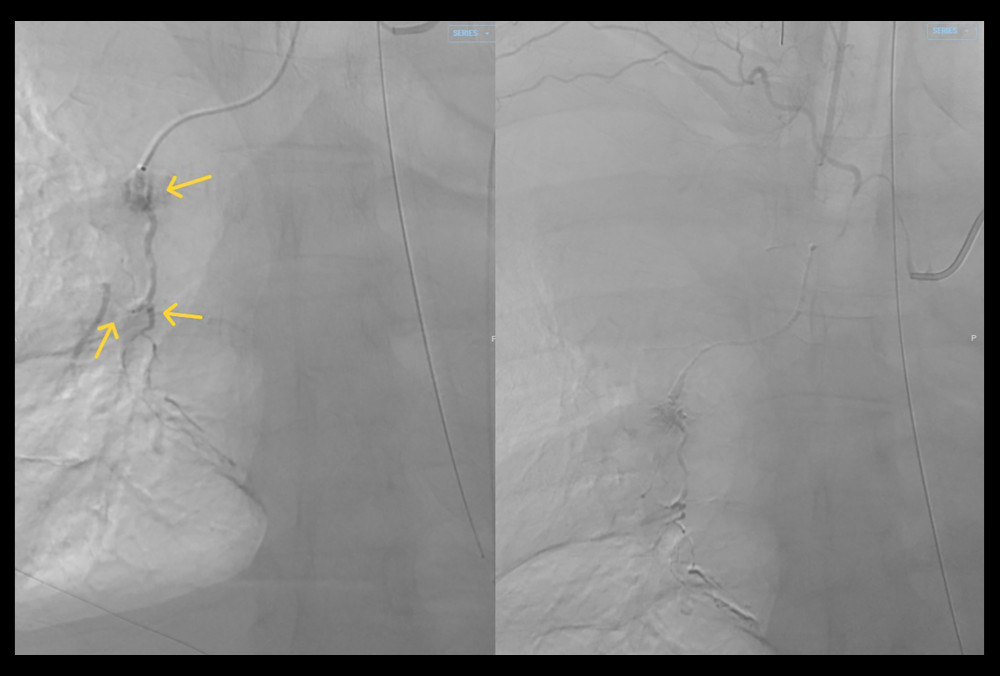 Figure 5. Right bronchial artery angiogram showing an irregular segment (arrow, left) and after embolization (right).
 References
1. Abe H, Funaki S, Chiba K, Traumatic rupture of the false lumen in a patient with preexisting chronic dissection of the descending thoracic aorta: Gen Thorac Cardiovasc Surg, 2011; 59; 559-62
2. Mikubo M, Sonoda D, Yamazaki H, Spontaneous non-traumatic mediastinal hematoma associated with oral anticoagulant therapy: A case report and literature review: Int J Surg Case Rep, 2017; 39; 221-24
3. Vosse BAH, Van Belle AF, De Vries GJ, Das M, Hemomediastinum due to spontaneous rupture of a mediastinal bronchial artery aneurysm – a rare cause of thoracic pain: Respir Med Case Rep, 2014; 12; 27-29
4. Seo YH, Kwak JY, Spontaneous hemomediastinum and hemothorax caused by a ruptured bronchial artery aneurysm: Korean J Thorac Cardiovasc Surg, 2011; 44(4); 314
5. Quero-Valenzuela F, Piedra-Fernández I, Sevilla-López S, de Guevara ACL, Spontaneous hemomediastinum and hemothorax after dissecting bronchial artery aneurysm: Interact Cardiovasc Thorac Surg, 2011; 12(4); 619-21
6. Lohan R, Leow KS, Ong MW, Role of intercostal artery embolization in management of traumatic hemothorax: J Emerg Trauma Shock, 2021; 14(2); 111-16
Figures
Figure 1. Chest X-ray showing widening of mediastinum (arrow).Figure 2. CT chest axial view showing mediastinal hematoma (arrow).Figure 3. CT chest coronal view showing mediastinal hematoma (arrow).Figure 4. Angiogram showing bleeding from right second intercostal artery (left) and after embolization (right).Figure 5. Right bronchial artery angiogram showing an irregular segment (arrow, left) and after embolization (right). In Press
Case report 
Am J Case Rep In Press; DOI: 10.12659/AJCR.954216
Case report 
Am J Case Rep In Press; DOI: 10.12659/AJCR.954932
Case report
Am J Case Rep In Press; DOI: 10.12659/AJCR.954146
Case report
Am J Case Rep In Press; DOI: 10.12659/AJCR.953555
Most Viewed Current Articles
07 Dec 2021 : Case report
28,712,748
DOI :10.12659/AJCR.934347
Am J Case Rep 2021; 22:e934347
06 Dec 2021 : Case report  180,779
DOI :10.12659/AJCR.934406
Am J Case Rep 2021; 22:e934406
21 Jun 2024 : Case report
124,457
DOI :10.12659/AJCR.944371
Am J Case Rep 2024; 25:e944371
08 May 2026 : Case report
95,565
DOI :10.12659/AJCR.952158
Am J Case Rep 2026; 27:e952158